
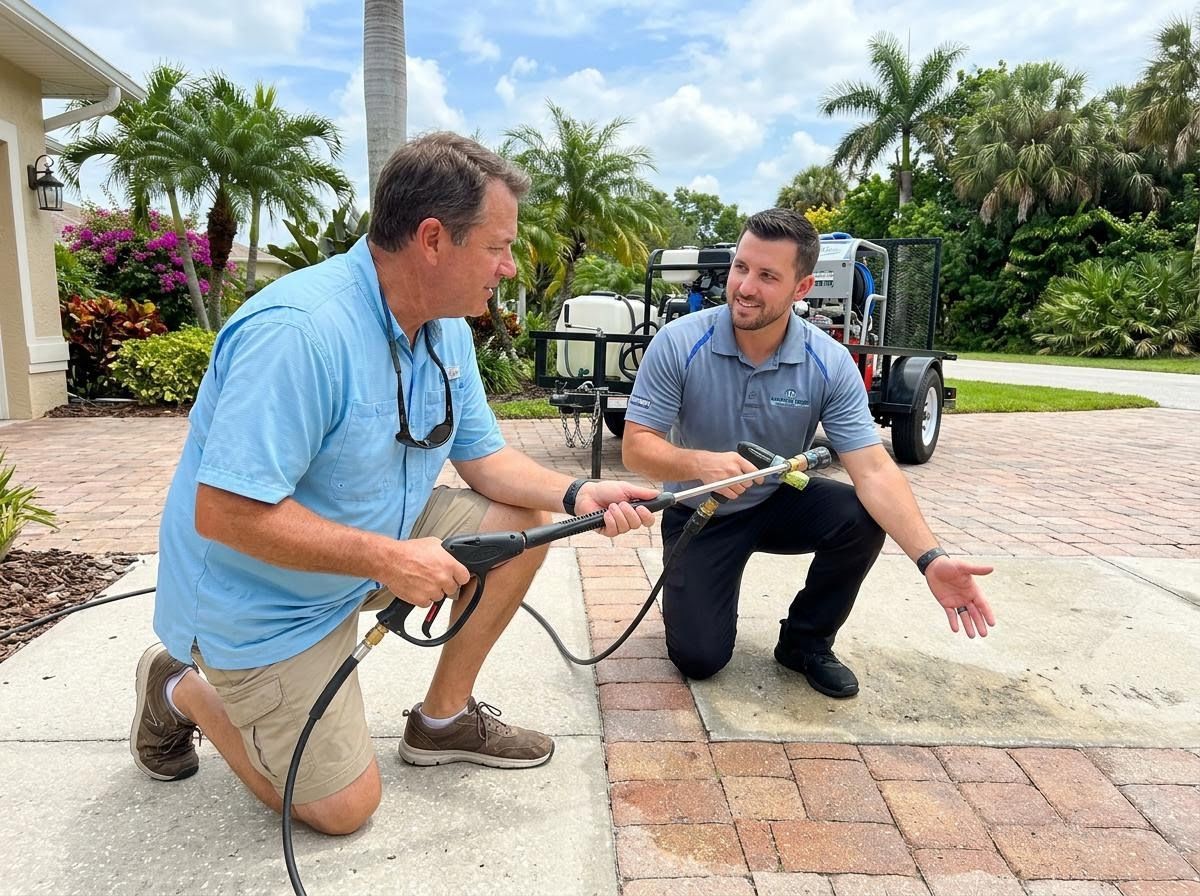
Deciding on the best cleaning method for your home's exterior can be challenging, especially when confronted with terms like soft washing and power washing. In humid climates like Florida's, dirt, grime, mold, and mildew can quickly diminish your driveway's appeal, necessitating effective cleaning solutions. At Master's Touch Paver Sealing & Pressure Washing, we understand the nuances of exterior restoration and are dedicated to helping homeowners make informed decisions to protect their valuable investments. This guide will clarify the differences between these two common cleaning techniques and help you determine which is superior for your Florida driveway.
Understanding Power Washing
Power washing utilizes high-pressure water streams to blast away tough dirt, oil stains, and caked-on grime. It's often the go-to method for durable surfaces that can withstand intense force. Concrete driveways, being notoriously robust, are frequently cleaned with power washing to restore their original look. The sheer force of the water can strip away layers of buildup quickly, making it an efficient choice for deeply embedded stains. However, this method requires a skilled hand; improper technique or excessive pressure can damage surfaces, etch patterns into concrete, dislodge joint sand from pavers, or even cause irreversible harm to softer materials.
Understanding Soft Washing
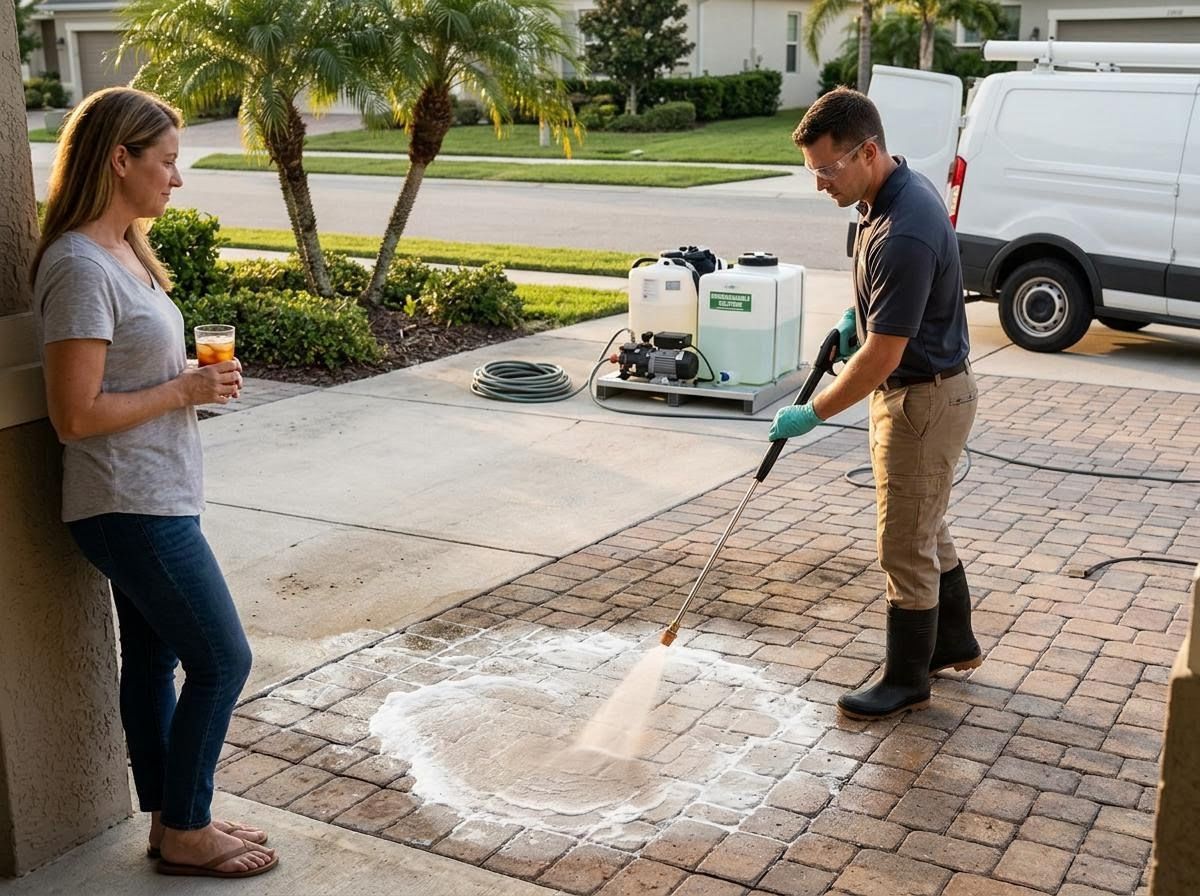
In contrast, soft washing employs a low-pressure water spray, similar to a garden hose, combined with specialized, eco-friendly cleaning solutions. This method is particularly effective for removing organic growth like mold, mildew, algae, and bacteria, which thrive in Florida's warm, moist environment. The cleaning solutions are designed to penetrate and kill these organisms at their root, providing a deeper and longer-lasting clean than simply blasting them away with high pressure. Soft washing is ideal for more delicate surfaces that cannot withstand the force of power washing, ensuring a thorough clean without risking damage.
Which is Best for Your Florida Driveway?
The optimal cleaning method largely depends on your driveway's material and the type of contaminants present. For concrete driveways with stubborn oil stains or heavy mud, a carefully executed power wash might be effective. However, for pervasive mold, mildew, or general dirt that covers the entire surface, soft washing is often the safer and more effective option, especially if your concrete is sealed or painted.
For paver driveways, soft washing is almost always the recommended approach. High-pressure washing can easily dislodge the polymeric sand between pavers, compromising their stability and creating an uneven surface. It can also strip sealants and damage the paver material itself. Soft washing gently removes unsightly growth and grime while preserving the integrity of your pavers and their foundational sand.
Asphalt driveways are particularly vulnerable to high pressure and should exclusively be soft washed. Power washing can erode the binder material in asphalt, leading to premature deterioration, cracking, and a reduced lifespan. Ultimately, a detailed assessment of your driveway's condition and material by an experienced professional is crucial to selecting the right technique.
Choosing the correct cleaning method for your Florida driveway is essential for both aesthetic appeal and long-term preservation. The distinction between power washing and soft washing lies not just in pressure, but in the precision and care applied to achieve a pristine finish without causing harm. Master's Touch Paver Sealing & Pressure Washing brings a craftsmanship-focused approach to every project, ensuring your driveway receives the meticulous care it deserves. To learn more about optimizing your driveway's longevity and curb appeal, explore our services and gain insights from our experienced team.